
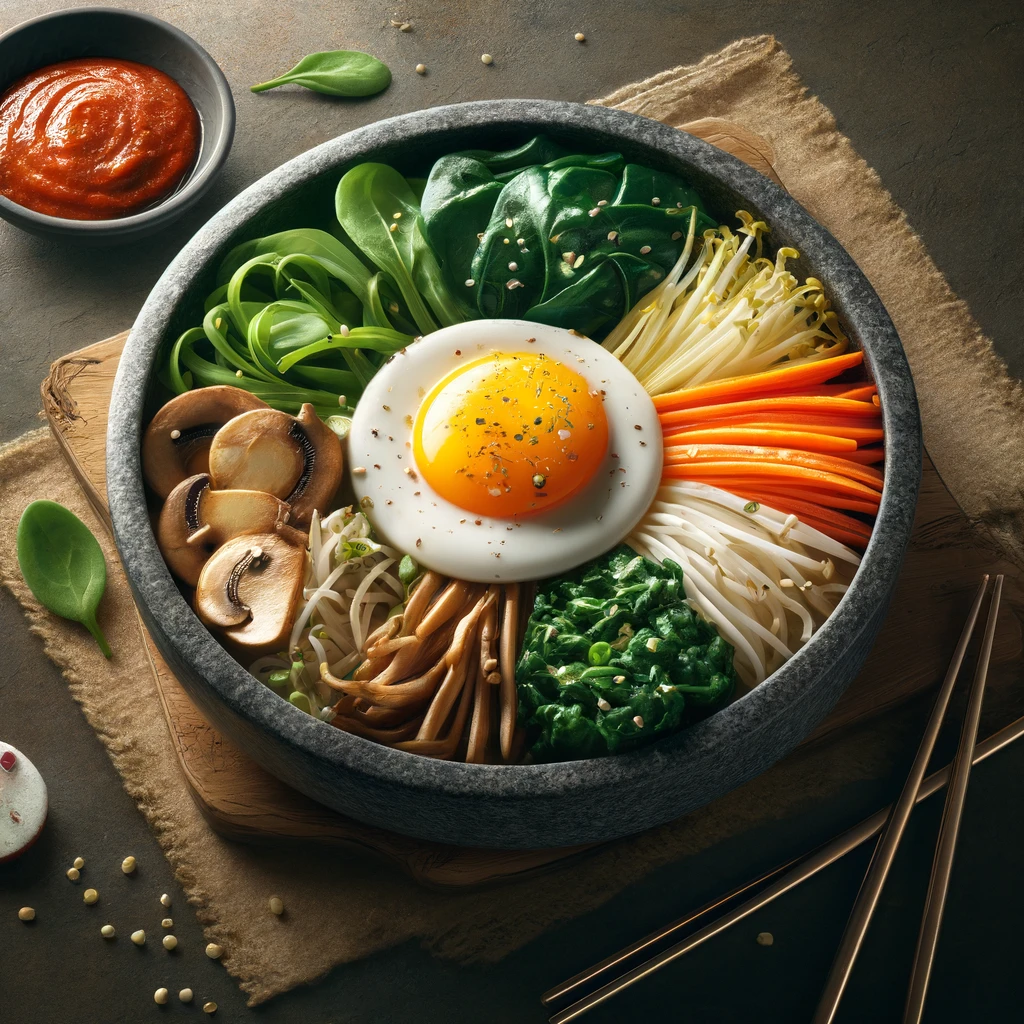
Bibimbap Recipe: A Colorful Korean Classic
Experience the vibrant flavors of Korea with this authentic Bibimbap recipe. Bibimbap, meaning "mixed rice," is a popular Korean dish that features a variety of sautéed vegetables, a fried egg, and seasoned meat served over warm rice. Topped with spicy gochujang, this dish offers a delightful balance of textures and flavors, making it a favorite in Korean cuisine.
Whether you're a seasoned cook or new to Korean food, this recipe will guide you through creating a beautiful and delicious Bibimbap at home. Enjoy the perfect harmony of colors and tastes in every bite!
Ingredients for Bibimbap
Meat and Meat Sauce
- 100 g beef mince (3.5 ounces), (or other cuts)
- 1 Tbsp soy sauce
- 1 Tbsp sesame oil
- 1 tsp brown sugar
- 1/4 tsp minced garlic
Vegetables and Other
- 250 g spinach (0.6 pounds)
- 350 g bean sprouts (0.8 pounds), (Adjust quantity to taste)
- 100 g shiitake mushroom (3.5 ounces)
- 120 g carrots (4.2 ounces, 1 small)
- 1/2 tsp fine sea salt (1/4 tsp each for shiitake mushrooms and carrots)
- 3 cups steamed rice (3 to 4 servings)
- 3 eggs (3 or 4 depending on serving size)
- Some cooking oil (for meat, mushrooms, carrots, and eggs – e.g., rice bran oil)
- Some toasted seasoned seaweed, shredded (thinly sliced)
Bibimbap Sauce
The sauce below is enough for 3 servings if you prefer it spicy.
- 2 Tbsp gochujang
- 1 Tbsp sesame oil
- 1 Tbsp sugar (e.g., raw sugar)
- 1 Tbsp water
- 1 Tbsp toasted sesame seeds
- 1 tsp vinegar (e.g., apple vinegar)
- 1 tsp minced garlic
Step-by-Step Directions for Making Bibimbap
- Prepare and cook ingredients as below:
- Meat: Mix the beef mince with the meat sauce ingredients. Marinate for about 30 mins. Heat some cooking oil in a wok and cook the meat on medium-high to high heat for 3 to 5 mins until fully cooked.
- Bibimbap Sauce: Mix all sauce ingredients in a bowl.
- Spinach and Bean Sprouts: Cook per your preferred recipe.
- Carrots: Rinse, peel, and julienne the carrots. Cook with some cooking oil and 1/4 tsp fine sea salt in a wok over medium-high to high heat for 2 to 3 mins.
- Shiitake Mushrooms: Clean, rinse, and thinly slice the mushrooms. Cook with some cooking oil and 1/4 tsp fine sea salt in a wok over medium-high to high heat for 2 to 3 mins until cooked.
- Eggs: Fry eggs sunny side up or to your preference.
- Assemble Bibimbap:
- Place steamed rice in a bowl. Add the cooked meat, assorted vegetables, shredded seaweed, and Bibimbap sauce. Top with a fried egg.
- Mix ingredients well before eating and enjoy!
Serving Suggestions
Bibimbap is incredibly versatile. Serve it with a variety of banchan (Korean side dishes), or wrap it in lettuce leaves. For a delightful meal, consider adding it to other Korean dishes like Bibimbap for a burst of flavors.
The Story Behind Bibimbap
Bibimbap, meaning “mixed rice,” is a vibrant and nutritious Korean dish with roots tracing back to the late Joseon Dynasty. Traditionally, it was a way to use up leftover vegetables, creating a harmonious blend of colors and flavors. This dish symbolizes balance and well-being, making it a cherished part of Korean cuisine.