
Korean food
Gochujang: the Korean chilli paste, and how to make it at home
고추장
Chilli powder, fermented soybean, rice and salt, fermented for two to three months. What is in it, how hot it gets, a vinegar dipping sauce, the full home recipe and a published shortcut.
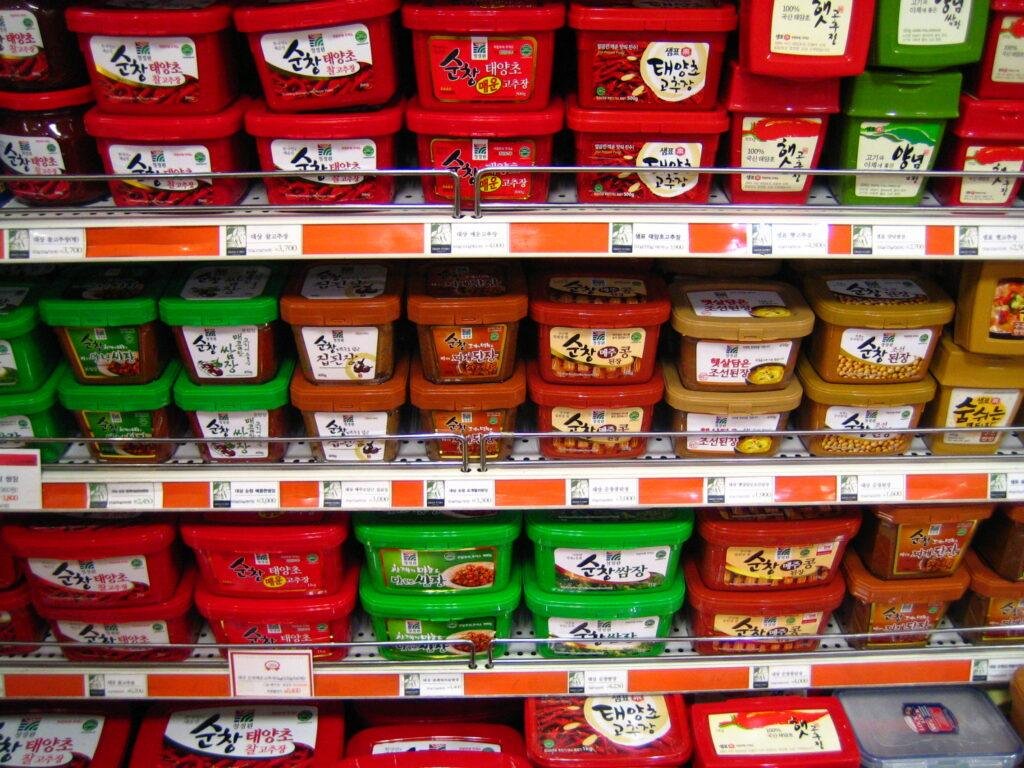
Gochujang is a Korean fermented chilli paste made from red chilli powder, fermented soybean powder (meju), glutinous rice and salt, left to ferment for two to three months or longer until it is thick, sweet, salty and hot. It is a cooking seasoning and the base of several sauces, and it can be made at home.
What is gochujang?
The name is two words. Gochu is the chilli pepper. Jang is the family of fermented Korean sauces and pastes built on meju, the dried fermented soybean blocks, which also includes doenjang (soybean paste) and ganjang (soy sauce).
Home recipes use four main ingredients plus a helper. Gochugaru, the chilli powder, gives colour and heat. Meju powder gives the savoury, fermented base. Glutinous rice, or in some recipes ordinary rice or barley, supplies starch, and barley malt turns that starch into sugar before the paste is mixed, which is where the sweetness comes from. Salt keeps it stable while it ages. Traditionally it aged in earthenware jars (jangdok) on a raised stone platform called a jangdokdae.
Factory paste follows the same logic in different proportions. A standard commercial composition cited in the Wikipedia article on gochujang looks like this:
| Ingredient | Share of the paste |
|---|---|
| Water | 29% |
| Red pepper powder | 25% |
| Glutinous rice | 22.2% |
| Salt | 12.8% |
| Meju powder (60% cooked soybeans, 40% rice) | 5.5% |
| Malt | 5% |
- Korean name
- 고추장 (gochujang)
- What it is
- Fermented chilli paste, one of the jang
- Made from
- Gochugaru, meju powder, glutinous rice, barley malt and salt
- Ferments for
- 60 to 90 days or longer (Korean Bapsang)
- Heat
- Five graded levels, from mild to extreme hot
- Vegan?
- The traditional ingredients are all plants
- Gluten
- Barley malt contains gluten, so check the label
- Recognised as
- UNESCO intangible cultural heritage, jang making, 2024
What does gochujang taste like?
Maangchi sums up what it does in a dish: it adds spiciness, colour and sweetness. Underneath those is the savoury depth of the fermented soybean. There is no vinegar in a traditional recipe, so the sourness some chilli sauces have is missing, and the paste is thick rather than pourable.
Is gochujang spicy?
Yes, but by how much depends on the tub. Korean gochujang is graded on a heat scale (GHU) based on measured capsaicin content, with five levels running from mild through slight hot, medium hot and very hot to extreme hot. Brands sell mild versions alongside the standard one, so the label is worth reading before assuming a recipe will come out the way its writer intended.
Gochugaru vs gochujang, and the other pastes
Gochugaru is dried chilli ground into flakes or powder. No fermentation, no sweetness. It is one of the ingredients of gochujang, not another name for it.
Doenjang is the soybean paste of the same jang family, made without chilli.
Ssamjang is mainly gochujang and doenjang mixed, with onion and other seasonings, served as a dip for meat wrapped in lettuce.
Chogochujang is gochujang loosened with vinegar and seasoned with sugar and sesame, a sauce rather than a paste.
Gochujang sauce: chogochujang
Korean Bapsang explains the name: cho is short for sikcho, vinegar. Her version, used as a dip for blanched vegetables and for seafood such as squid and raw fish, is:
- Gochujang, 2 tablespoons
- Vinegar, 2 tablespoons, more to taste
- Sugar, 1 tablespoon, more to taste
- Garlic, ½ teaspoon minced
- Sesame oil, 1 teaspoon
- Sesame seeds, ½ teaspoon
Stir everything together until the sugar dissolves.
Gochujang recipe: making the paste at home
This is a project of two to three months, most of it waiting. The quantities are from Korean Bapsang’s How to Make Gochujang, which makes about three quarters of a US gallon. The method is summarised below.
Ingredients
- Barley malt powder (yeotgireum), 500 g
- Wet sweet rice flour (chapssal garu), 500 g
- Fermented soybean powder (meju garu), 250 g
- Korean coarse sea salt (cheonilyeom), 250 g
- Finely ground gochugaru, 500 g
- Rice syrup (jocheong), 1 cup, optional
Method
- Soak the barley malt in 10 cups of warm water for an hour or two, or overnight. Rub it between your hands, then squeeze the liquid out through a fine sieve. Repeat with fresh water until you have about 17 to 18 cups of malt water.
- Stir the sweet rice flour into the malt water and warm it gently. Take it off the heat and leave it for two hours while the enzymes in the malt break the starch down into sugar.
- Boil the liquid down by half, stirring now and then. This takes about two hours and leaves around 8 to 9 cups.
- While it is still warm, measure 7 cups into a large bowl. Dissolve the salt in it, whisk in the meju powder, then the gochugaru, until smooth. Adjust the thickness and sweetness with the remaining liquid or the rice syrup. Korean Bapsang advises holding back some of the salt and adding it as needed.
- Pack the paste into an earthenware onggi or a glass jar, cover the opening with fine mesh or cheesecloth, and put the lid on.
- Ferment for 60 to 90 days or longer, outdoors in cool weather or indoors by a sunny window, opening it to the sun on clear days. After that it can be refrigerated and eaten, and it keeps improving with time.
Korean Bapsang notes that gochujang is traditionally made in the cold months, usually October to March. Maangchi’s version is far larger, about 16 quarts, from 2 pounds of barley malt powder, 10 cups of sweet rice flour, 8 cups of rice syrup, 4 cups of fermented soybean powder, 16 cups of chilli powder and 4 cups of kosher salt. Her paste also ferments for two to three months, in the sun during the day and covered at night.
Gochujang substitute
A quick substitute cannot copy months of fermentation. The most useful shortcut we found in a published source is the cheater’s gochujang from the cookbook K-Food by Da-Hae West, reproduced on Leite’s Culinaria. It stirs together ½ cup of white miso, ¼ cup of light corn syrup (or agave syrup or honey), ¼ cup of cayenne pepper, 2 tablespoons of mirin, 1 tablespoon of superfine sugar and a minced clove of garlic, and makes about a cup in five minutes. Leite’s testers found it hotter and less salty than shop-bought gochujang, so cut the cayenne if heat matters.
Is gochujang vegan or gluten free?
The traditional ingredients are all plants: chilli, soybean, rice, malt and salt. Nothing in the recipe above comes from an animal, which makes gochujang one of the easier Korean staples for a vegan kitchen, unlike most kimchi.
Gluten is the one to check. Barley malt contains gluten, as Korean Bapsang points out, and some recipes add wheat. For anyone avoiding gluten, the label on the tub is the only reliable answer.
Jang, and why UNESCO listed it in 2024
On 3 December 2024, meeting in Asunción, Paraguay, UNESCO’s intergovernmental committee inscribed the knowledge, beliefs and practices of jang making in the Republic of Korea on its list of the intangible cultural heritage of humanity. UNESCO described jang making as an essential Korean culinary tradition alongside the staples of rice and kimchi, and noted that households keep their own methods, which carry family history. Kimchi’s own entry, for kimjang, came eleven years earlier.
Where gochujang comes from
Chilli peppers came to East Asia from the Americas with Portuguese traders in the early 16th century, so gochujang as it is made now is a Joseon-period food. An early recipe appears in Jeungbo sallim gyeongje of 1766, which combines powdered meju, chilli powder and glutinous rice flour.
Sunchang, a county in Jeonbuk Province, has a whole village given over to the paste. The Korea Tourism Organization describes its Gochujang Village as home to makers who still use traditional methods, where visitors can learn to make it and eat dishes built on it.
How to cook with it
It is cooked into some dishes and added at the table in others. On this site it turns up in most of the red dishes: ⅓ cup of it makes the sauce for tteokbokki, a tablespoon goes into Maangchi’s kimchi jjigae, a spoonful tops bibimbap, and it seasons spicy pork bulgogi, the red yangnyeom glaze on Korean fried chicken and the dak galbi covered in our galbi guide.
Frequently asked questions
How do you pronounce gochujang?
It is written 고추장 and has three syllables: go-chu-jang. Gochu is the chilli pepper and jang is the fermented paste.
What is the difference between gochujang paste and gochujang sauce?
The paste is the fermented jang itself, thick and unseasoned beyond salt and sweetness. A gochujang sauce is paste loosened and seasoned for one job, such as chogochujang, which adds vinegar, sugar, garlic and sesame to make a dip.
How long does gochujang last once opened?
Maangchi's advice is to keep it in the fridge once opened and use it within three months. The top may darken or dry out, and it is still edible.