South Korea · Film · 2003
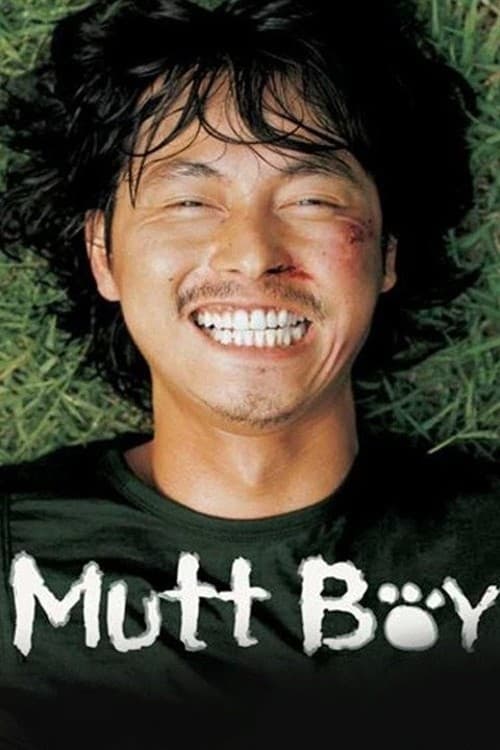
Mutt Boy
Synopsis
Mutt Boy (똥개, 2003) follows Cha Chul-min (Jung Woo-sung), a developmentally disabled young man living in a small rural town, whose extraordinary fighting ability, unusual for his gentle nature, draws a loyal gang of followers and earns him a fearsome local reputation. His closest companion is his beloved dog, and when the animal is brutally killed by a group of older local thugs, Chul-min is consumed by grief and a fierce need for revenge.
Raised largely under the watch of his father (Kim Kap-soo), a local police detective, Chul-min's world shifts further when his father takes in Kim Jung-ae (Uhm Ji-won), a young orphan with a history of petty theft. Despite their rocky start, a tender, unlikely bond grows between Chul-min and Jung-ae as they navigate the town's criminal underworld together.
As Chul-min sets out to confront the men responsible for his dog's death, the film blends gritty small-town violence with surprising tenderness, following his journey toward loyalty, justice, and an unexpected first love amid a world that has largely underestimated him.
Mutt Boy cast
Billing not confirmed for these names.


Best scenes
-
🐶 The heartbreaking death of Chul Min’s dog—a deeply emotional turning point that drives the rest of the film.
-
👊 Chul Min’s unexpected street fight—his raw strength and unfiltered instincts shock both viewers and characters alike.
-
🧑✈️ Father-son silent standoff—a powerful scene loaded with unspoken pain and generational misunderstanding.
-
🥢 Dinner table breakdown—a rare moment that blends humor with heartbreak, reflecting the emotional fragility of Chul Min.
-
🥊 Climactic gang showdown—an intense fight that reveals Chul Min’s internal rage and external resilience.
Filming locations
-
🏘 Suburban neighborhoods and backstreets of South Korea portray the gritty, working-class environment.
-
🚓 Local police station settings reinforce the tension between Chul Min and his father’s authority.
-
🏚 Dilapidated hangouts and rooftops give authenticity to the gang’s underdog spirit.
-
🐾 Outdoor rural paths and fields emphasize Chul Min’s bond with nature and his dog.
-
🌆 Night street scenes highlight the emotional isolation and chaos that define Chul Min’s journey.
Visual design and costumes
-
🎥 Handheld camera movements and natural lighting create a raw, documentary-like realism.
-
👕 Chul Min’s loose, rugged outfits mirror his untamed and emotionally suppressed nature.
-
🧥 Police uniforms and school clothes provide contrast between order and rebellion.
-
🎨 Muted, earthy tones dominate the palette, enhancing the gritty and grounded aesthetic.
-
🐾 Symbolic shots of his dog are used throughout, visually reinforcing themes of loyalty and grief.
Themes and messages
-
🧠 Mental health and emotional repression are subtly explored through Chul Min’s behavior and silence.
-
👨👦 Father-son disconnect plays a central emotional role, driving the narrative’s tension and growth.
-
🐕 Loyalty, grief, and love for animals highlight how the protagonist connects more with creatures than people.
-
🤝 Belonging among misfits shows how broken people find strength in one another.
-
🔄 Transformation through loss and violence is portrayed as both tragic and cathartic.
Interesting facts
-
🎭 Jung Woo Sung underwent physical training to portray Chul Min’s unfiltered aggression authentically.
-
🎬 Directed by Kwak Kyung Taek, also known for Friend (2001)—a cult classic Korean youth drama.
-
🐶 The film’s Korean title “Ddong Gae” literally means Poop Dog, a nickname symbolizing society's view of the outcast.
-
🎥 The movie gained a reputation as one of the early 2000s' most emotionally raw Korean gangster dramas.
-
🧠 The lead character is widely interpreted as being on the autism spectrum, though never explicitly stated, making it a rare early example of such a portrayal in Korean cinema.
If you liked this film
Matched on genre, country and era. Closest first.