
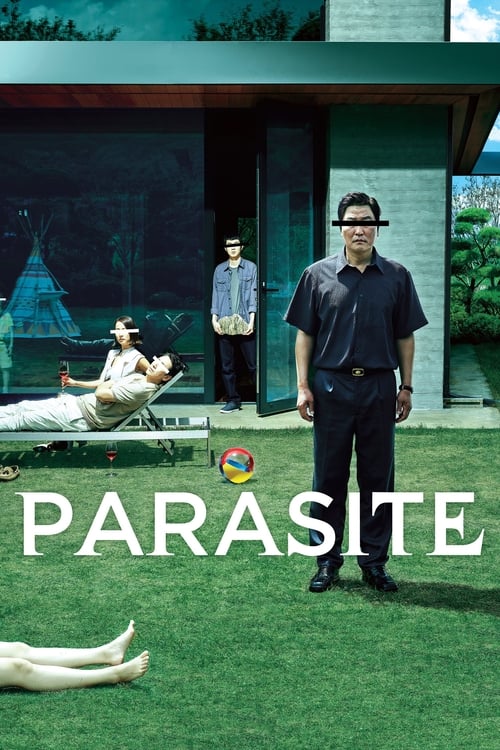
South Korea · Film · 2019
Parasite
Binge Brief
- Parasite is the first South Korean film to win the Palme d'Or at the Cannes Film Festival.
- The film also won Best Picture, Best Director and Best Original Screenplay at the Academy Awards.
- Director Bong Joon Ho based the story partly on his own observations of class dynamics in South Korea.
- The basement set built for the Kim family's hideaway took several months to construct.
- Parasite also won Best Foreign Language Film at both the Golden Globe Awards and the BAFTA Awards.
Synopsis
"Parasite," a gripping South Korean film directed by Bong Joon Ho, unfolds a tale of social disparity and deceit that captivates audiences worldwide. The story revolves around the impoverished Kim family, led by Kim Ki Taek (portrayed by Song Kang Ho), who cunningly infiltrate the affluent Park household. As Kim Ki Taek and his family, including his son Kim Ki Woo (played by Choi Woo Shik) and daughter Kim Ki Jung (portrayed by Park So Dam), seamlessly integrate into the lives of the Parks, they gradually become entangled in a web of deception and ambition.
At the heart of "Parasite" lies a thrilling narrative that explores the complexities of class divide and the lengths individuals will go to in order to ascend the social ladder. With stellar performances from the cast, including Lee Sun Kyun as Park Dong Ik and Cho Yeo Jung as Choi Yun Gyo, the film navigates through themes of identity, morality, and the pursuit of the elusive "American Dream." As tensions escalate and secrets unravel, the Kim family finds themselves entangled in a precarious game of survival, where the line between predator and prey becomes increasingly blurred.
Bong Joon Ho masterfully crafts each scene, infusing the film with dark humor, suspense, and poignant social commentary. From the meticulous planning of the Kim family's schemes to the unexpected twists that keep viewers on the edge of their seats, "Parasite" delivers an immersive cinematic experience that resonates long after the credits roll. With its thought-provoking narrative and standout performances from actors like Park Seo Joon in a memorable guest role as Min Hyuk, "Parasite" has solidified its place as a modern masterpiece and a must-watch for cinephiles around the globe.
In a world where economic disparity reigns supreme, "Parasite" serves as a compelling reflection of society's darkest truths, challenging viewers to confront uncomfortable realities while keeping them riveted with its gripping storytelling and unforgettable characters. Through its seamless blend of suspense, drama, and social commentary, "Parasite" transcends cultural boundaries to deliver a universal message about the lengths people will go to in pursuit of their dreams, and the unforeseen consequences that may ensue.
Parasite cast






Best scenes
- The captivating climax showcases a battle of wits and survival.
- The unforgettable birthday party scene is rife with tension and revelation.
- The gripping basement sequence unveils shocking truths and hidden agendas.
- The montage of the Kim family's infiltration into the Park household is both suspenseful and darkly comedic.
- The rain-soaked confrontation between the Kim and Park families amplifies the film's intensity.
Filming locations
- The semi-basement home of the Kim family provides a stark portrayal of their economic status.
- The opulent Park mansion, situated in an affluent neighborhood, serves as a stark contrast.
- Various locations in Seoul, South Korea, including bustling streets and quiet alleyways, capture the essence of urban life.
- The university scenes were filmed at Ewha Womans University, adding authenticity to the academic setting.
- The memorable flood sequence was shot in a specially constructed set, showcasing the director's attention to detail.
Visual design and costumes
- The cramped, cluttered interiors of the Kim family's home reflect their lower socioeconomic status.
- The sleek, minimalist design of the Park mansion highlights their wealth and privilege.
- Costume choices subtly convey character traits and socioeconomic backgrounds.
- The use of color palettes, from drab tones for the Kim family to vibrant hues for the Parks, reinforces the class divide.
- Attention to detail in set design and costumes enhances the film's realism and immersive experience.
Themes and messages
- The exploration of social inequality and class struggle resonates deeply with audiences worldwide.
- Themes of deception, ambition, and the pursuit of the "American Dream" are prevalent throughout the narrative.
- The film challenges conventional notions of morality and ethics, blurring the lines between right and wrong.
- Symbolism, such as the use of stairs and architectural spaces, underscores the theme of upward mobility.
- "Parasite" serves as a poignant commentary on the universal desire for upward social mobility and the lengths one may go to achieve it.
Interesting facts
- "Parasite" made history as the first South Korean film to win the Palme d'Or at the Cannes Film Festival.
- Director Bong Joon Ho drew inspiration from his own experiences and observations of class dynamics in South Korea.
- The film's title, "Parasite," carries multiple layers of meaning, reflecting its complex themes.
- The basement set was meticulously designed and constructed, taking several months to complete.
- "Parasite" received widespread critical acclaim and became a commercial success, surpassing box office expectations both domestically and internationally.
Real-life loves on set
- Director Bong Joon Ho and actress Cho Yeo Jung, who portrayed Choi Yun Gyo, formed a close bond during filming.
- Song Kang Ho, who played Kim Ki Taek, and Lee Jung Eun, who portrayed Guk Mun Gwang, shared a warm camaraderie on set.
- Park So Dam and Choi Woo Shik, who played siblings Kim Ki Jung and Kim Ki Woo, developed a close friendship off-screen.
- Lee Sun Kyun and Cho Yeo Jung, who portrayed the affluent Park couple, showcased remarkable chemistry in their roles.
- The entire cast and crew formed a tight-knit community during production, contributing to the film's success and camaraderie.
Frequently asked questions
What is Parasite about?
Parasite follows the poor Kim family as they scheme their way into working for the wealthy Park family, and the story turns on how far each side will go once the deception starts to unravel.
Who directed Parasite?
Bong Joon Ho directed Parasite, drawing on his own observations of class dynamics in South Korea.
What awards has Parasite won?
Parasite won the Palme d'Or at the Cannes Film Festival, the first South Korean film to do so, then went on to win Best Picture, Best Director and Best Original Screenplay at the Academy Awards.
Where was Parasite filmed?
Filming took place around Seoul, South Korea. The Kim family's semi-basement home and the Park family's mansion were both built as sets, and scenes were also shot at Ewha Womans University.
What is the meaning behind Parasite's title?
The film's title carries multiple layers of meaning tied to its themes of class and dependency, reflecting how the two families become entangled with each other.