Seoul 1945

Seoul 1945

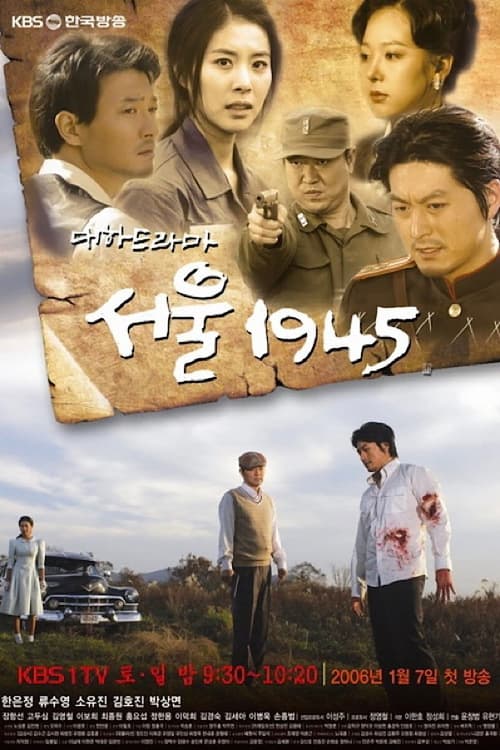
Seoul 1945 is a compelling historical Korean drama set during the turbulent times of Korea’s liberation from Japanese occupation and the onset of the Korean War. This epic series masterfully intertwines politics, romance, and fate, painting a gripping portrait of a divided nation through the eyes of four individuals from vastly different backgrounds. Ryu Soo Young stars as Choi Woon Hyuk, a bright young man from a poor family who dreams of becoming a lawyer to serve the people. His fate is intertwined with Moon Suk Kyung (played by So Yoo Jin), the daughter of a wealthy pro-Japanese collaborator, who slowly transforms into a woman of conscience. Their relationship is complicated by opposing ideologies and the growing chaos in post-war Korea. Kim Ho Jin plays Lee Dong Woo, an idealistic left-wing activist whose passion for justice often clashes with the harsh reality of political power plays. Meanwhile, Han Da Gam as Kim Hae Kyung (also known as Kim Ke Hee) adds depth to the narrative, portraying a woman torn between loyalty and survival. Their personal stories reflect the nation's ideological divisions and human cost of political ambition. With its powerful performances, sweeping cinematography, and a script rich in emotion and historical detail, Seoul 1945 offers a must-watch experience for fans of historical K-dramas. Themes of love, sacrifice, and national identity resonate throughout the series, making it one of the most memorable political dramas in Korean television history.

Details

🙂 Native Title: 서울 1945
🌎 Also Known As: Seoul 1945
🎭 Genres: Historical, War, Drama, Romance
🏷 Tags: Korean War, Post-Japanese Occupation, Political Ideology, Love Triangle, Social Class Divide
Screenwriters: Lee Han-ho, Jung Sung-hee
🎬 Directors: Yoon Chang-beom, Yoo Hyun-ki
🇰🇷 Country: South Korea
🎬 Episodes: 71
🗓️ Aired: January 7, 2006 – September 10, 2006
📅 Airing Days: Saturdays & Sundays
📺 Original Network: KBS1
Duration: 50 minutes per episode
🔞 Content Rating: Not Yet Rated

  • Liberation Day Celebration: The euphoric scenes depicting Korea’s liberation from Japanese colonial rule are emotionally charged, showcasing national pride and hope.

  • Ideological Confrontations: Tense debates between characters representing differing political ideologies highlight the nation’s internal conflicts during the post-liberation period.

  • Family Reunions Amidst Chaos: Heartfelt reunions of separated families underscore the personal toll of national division and war.

  • Romantic Entanglements: The complex relationships between protagonists, set against political turmoil, add depth to the narrative.

  • Climactic Courtroom Drama: A pivotal courtroom scene encapsulates the struggle for justice and the rule of law in a nascent nation.

  • Gyeongbokgung Palace: Used to depict governmental settings, reflecting the historical significance of the location.

  • Bukchon Hanok Village: The traditional Korean houses provided authentic backdrops for domestic scenes.

  • Namsan Park: Featured in scenes showcasing Seoul’s landscape, symbolizing the city’s resilience.

  • Seodaemun Prison History Hall: Utilized for scenes portraying imprisonment and resistance, adding historical authenticity.

  • Cheonggyecheon Stream: Served as a setting for various public gatherings and marches within the series.

  • Authentic Hanboks: Traditional Korean attire was meticulously recreated to reflect the 1940s fashion accurately.

  • Military Uniforms: Detailed uniforms represented various factions, emphasizing the era’s political complexity.

  • Period-Accurate Sets: The production design included era-specific props and architecture to immerse viewers in the time period.

  • Color Palette: Muted tones dominated the visual aesthetic, reflecting the somber mood of the era.

  • Makeup and Hairstyles: Styling choices were consistent with the 1940s, enhancing character authenticity.

  • National Division: The series explores the ideological split leading to the Korean War, emphasizing its impact on individuals.

  • Resistance and Collaboration: It delves into the complexities of resisting or collaborating with occupying forces.

  • Love Amidst Turmoil: Personal relationships are tested against the backdrop of national upheaval.

  • Quest for Justice: Characters grapple with legal and moral dilemmas in a rapidly changing society.

  • Identity and Loyalty: The narrative questions personal and national identity during times of crisis.

  • Historical Accuracy: The series is noted for its commitment to depicting historical events and settings authentically.

  • Educational Value: Often used as a reference in academic discussions about Korea’s post-liberation period.

  • Award Recognition: Received accolades for its storytelling and production design, highlighting its quality.

  • Cultural Impact: Sparked renewed interest in Korea’s history among younger audiences.

  • International Broadcast: The drama was aired in several countries, contributing to the global Hallyu wave.

🏆 2006 KBS Drama Awards

  • Top Excellence Award, Actor: Ryu Soo-young (Choi Woon-hyuk)

  • Top Excellence Award, Actor: Shin Goo (Hearts of Nineteen, Seoul 1945)

  • Excellence Award, Actress: Han Eun-jung (Kim Hae-kyung)

  • Best Supporting Actor: Park Sang-myun (Park Chang-joo)

  • Best Young Actor: Kim Seok (young Choi Woon-hyuk)

  • Best Young Actress: Ko Joo-yeon (young Kim Hae-kyung) 


🏆 2007 43rd Baeksang Arts Awards

  • Best Drama (TV): Seoul 1945

  • Best Actor (TV): Ryu Soo-young (Nominated)

  • Best Director (TV): Yoon Chang-beom (Nominated)

  • Best Screenplay (TV): Lee Han-ho, Jung Sung-hee (Nominated)

There is no publicly known romantic relationship that developed between the cast members of the Korean drama Seoul 1945 during or after its production. The lead actors, including Ryu Soo-young, Han Eun-jung, So Yoo-jin, and Kim Ho-jin, have not been reported to have been involved in real-life romantic relationships with each other stemming from their work on this series.

Ryu Soo-young later married actress Park Ha-sun, whom he met while working on a different project, Two Weeks, in 2013. Their relationship became public in 2015, and they married in 2017. There is no indication that his role in Seoul 1945 led to any off-screen romance.

While Seoul 1945 is renowned for its intense on-screen love triangles and emotional depth, these dynamics remained within the realm of fiction. The cast’s real-life relationships did not mirror the romantic entanglements portrayed in the drama.

Trailer

Music / OST

Gallery

Cast

Ko Kyu Pil
Ko Kyu Pil
Park Eun Bin
Park Eun Bin
Park Shin Hye
Park Shin Hye

Share on Social

We would appreciate it if you could share this on social media and support us. Let’s grow Asian World together.

Leave a Comment

Your email address will not be published. Required fields are marked *