South Korea · Drama · 2000
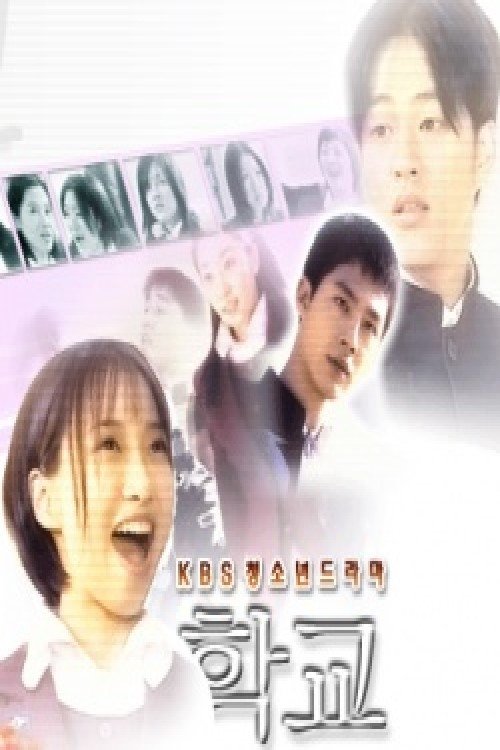
School 3
Synopsis
"School 3" follows Yoo Da In, a bright, book-loving student who transfers from the countryside into a Seoul high school where students from very different backgrounds sit in the same classroom: children from a wealthy apartment complex, kids from the modest housing block nearby, and families from an older, underdeveloped street. Da In's unguarded honesty makes her an easy target, and she is bullied almost as soon as she arrives. Lee Se Chan, a reformed former troublemaker at the same school, steps in to protect her, and the drama builds its central relationship out of that unlikely rescue.
Around that pairing, the series follows a wider group of classmates as they navigate exams, first crushes, family pressure, and the class tension that the school's mixed intake keeps surfacing. Friendships form and fracture along the same lines that divide the neighborhood outside, and the show spends as much time on the students who watch the bullying happen as on the two people at its center.
"School 3" is the third entry in KBS2's long-running "School" anthology, each installment built around a new set of students at the same fictional school. It ran for 49 episodes from March 5, 2000 to February 25, 2001, directed by Lee Kang Hyun with a script by Hong Jin Ah and Hong Ja Ram. It is best remembered today for the two lead actors who broke out from its cast: Zo In Sung, in one of his first major roles, and Lee Dong Wook, who returned as Lee Kang San, the character he had already introduced a year earlier in "School 2."
Like the rest of the franchise, "School 3" was made as straightforward, present-day teen drama rather than a nostalgia piece, and its value for most viewers now is historical: a look at where two of Korean television's most durable stars started out.
School 3 cast

Best scenes
-
Kim Suk Joo’s emotional confrontation with a teacher, played by Zo In Sung, showcases the pressure of expectations and delivers a powerful early-career performance.
-
Lee Kang San’s rooftop monologue, portrayed by Lee Dong Wook, is a heartfelt moment of vulnerability that resonated deeply with teen viewers.
-
Classroom breakdown scene, where tensions explode between students over bullying, delivers raw emotion and realism.
-
Bae Lee Kyung’s teary fight with her best friend, an emotional fallout that captures the fragility of teen friendships.
-
Final graduation scene, where the main characters reflect on growth and say goodbye, offers a satisfying and nostalgic closure.
Filming locations
-
KBS Studio sets in Seoul served as the main school setting, giving the series a consistent and realistic academic backdrop.
-
Actual Seoul high school exteriors were used for key outdoor scenes, enhancing authenticity and visual familiarity for local viewers.
-
City parks and walkways appeared in emotional scenes between friends and couples, often symbolizing transition or solitude.
-
Residential neighborhoods were featured in side stories, showing the personal lives of students outside school.
-
Classroom interiors and corridors were carefully designed to reflect a typical Korean high school environment from the early 2000s.
Visual design and costumes
-
Uniforms were styled simply, mirroring the realistic tone of the series and emphasizing the students’ social equality.
-
Hair and makeup were kept natural, enhancing relatability and grounding the characters in everyday life.
-
Soft lighting in classroom scenes added warmth and emotional depth to dramatic interactions.
-
Costumes evolved subtly to reflect changes in character development, especially among main leads.
-
Set design leaned toward minimalism, highlighting the drama’s realistic, documentary-style storytelling approach.
Themes and messages
-
Coming of age in a competitive society is a core theme, showing the emotional and academic struggles of South Korean teens.
-
Bullying and peer pressure are addressed head-on, revealing the psychological toll they take on students.
-
Friendship and loyalty are tested and celebrated, forming the heart of the series' emotional appeal.
-
Teacher-student relationships are explored, both supportive and conflicting, reflecting real-world school dynamics.
-
Dreams vs. reality is a recurring dilemma, as students wrestle with what they want to become versus what society expects.
Interesting facts
-
Zo In Sung and Lee Dong Wook made early career breakthroughs in "School 3," later becoming top-tier Hallyu stars.
-
The “School” series is famous for launching the careers of many K-drama actors across its different seasons.
-
“School 3” aired during a time when K-dramas were shifting toward realism, helping redefine youth drama formats.
-
Despite its age, fans still praise the drama for its timeless message and authentic depiction of school life.
-
The drama’s open-ended storytelling allowed room for interpretation and audience connection, which became a signature of the franchise.
Real-life loves on set
There is no public or confirmed report of a real-life romance between any of the cast members of the Korean drama "School 3" (2000). While the show featured strong on-screen chemistry, especially between rising stars like Zo In Sung, Lee Dong Wook, Oh Yoo Na, and Lee In Hye, their relationships remained professional.
The realistic portrayal of teen love and friendship may have led fans to speculate about off-screen romances, but none of the cast members have acknowledged or revealed any romantic involvement that began during the filming of "School 3." As of now, the love stories in the drama stayed fictional and didn't translate into real-life relationships.
Episodes
| Ep | Title | Air date | Status | Rating |
|---|---|---|---|---|
| 1 | Episode 1 | 2000-03-05 | Aired | |
| 2 | Episode 2 | 2000-03-12 | Aired | |
| 3 | Episode 3 | 2000-03-19 | Aired | |
| 4 | Episode 4 | 2000-03-26 | Aired | |
| 5 | Episode 5 | 2000-04-02 | Aired | |
| 6 | Episode 6 | 2000-04-09 | Aired | |
| 7 | Episode 7 | 2000-04-16 | Aired | |
| 8 | Episode 8 | 2000-04-23 | Aired | |
| 9 | Episode 9 | 2000-04-30 | Aired | |
| 10 | Episode 10 | 2000-05-07 | Aired | |
| 11 | Episode 11 | 2000-05-14 | Aired | |
| 12 | Episode 12 | 2000-05-21 | Aired | |
| 13 | Episode 13 | 2000-06-04 | Aired | |
| 14 | Episode 14 | 2000-06-11 | Aired | |
| 15 | Episode 15 | 2000-06-18 | Aired | |
| 16 | Episode 16 | 2000-06-25 | Aired | |
| 17 | Episode 17 | 2000-07-02 | Aired | |
| 18 | Episode 18 | 2000-07-09 | Aired | |
| 19 | Episode 19 | 2000-07-23 | Aired | |
| 20 | Episode 20 | 2000-07-30 | Aired | |
| 21 | Episode 21 | 2000-08-06 | Aired | |
| 22 | Episode 22 | 2000-08-13 | Aired | |
| 23 | Episode 23 | 2000-08-20 | Aired | |
| 24 | Episode 24 | 2000-08-27 | Aired | |
| 25 | Episode 25 | 2000-09-03 | Aired | |
| 26 | Episode 26 | 2000-10-08 | Aired | |
| 27 | Episode 27 | 2000-10-15 | Aired | |
| 28 | Episode 28 | 2000-10-22 | Aired | |
| 29 | Episode 29 | 2000-10-29 | Aired | |
| 30 | Episode 30 | 2000-11-05 | Aired | |
| 31 | Episode 31 | 2000-11-12 | Aired | |
| 32 | Episode 32 | 2000-11-19 | Aired | |
| 33 | Episode 33 | 2000-11-26 | Aired | |
| 34 | Episode 34 | 2000-12-03 | Aired | |
| 35 | Episode 35 | 2000-12-17 | Aired | |
| 36 | Episode 36 | 2000-12-24 | Aired | |
| 37 | Episode 37 | 2000-12-31 | Aired | |
| 38 | Episode 38 | 2001-01-07 | Aired | |
| 39 | Episode 39 | 2001-01-14 | Aired | |
| 40 | Episode 40 | 2001-01-21 | Aired | |
| 41 | Episode 41 | 2001-01-28 | Aired | |
| 42 | Episode 42 | 2001-02-04 | Aired | |
| 43 | Episode 43 | 2001-02-11 | Aired | |
| 44 | Episode 44 | 2001-02-18 | Aired | |
| 45 | Episode 45 | 2001-02-25 | Aired | |
| 46 | Episode 46 | 2001-03-11 | Aired | |
| 47 | Episode 47 | 2001-03-18 | Aired | |
| 48 | Episode 48 | 2001-03-25 | Aired |
Part of the same story


If you liked this drama
Matched on genre, country and era. Closest first.