Taiwan culture
Traditional and simplified Chinese: which characters Taiwan uses, and why
繁體字 / 简体字 (fántǐzì / jiǎntǐzì)
Who writes which script, what the mainland's 1956 reform actually changed, why Taiwan calls its characters "orthodox", and why converting simplified text back to traditional still goes wrong.
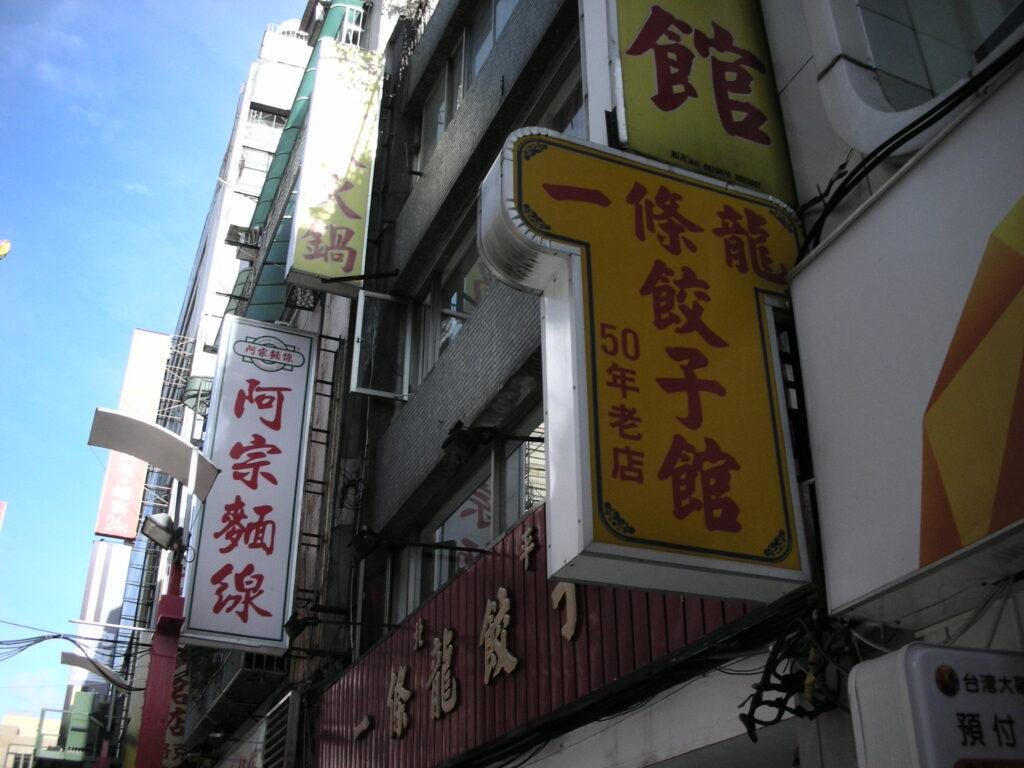
Traditional and simplified Chinese are two ways of writing the same characters. Taiwan, Hong Kong and Macau write traditional characters. Mainland China, Singapore and Malaysia write simplified ones, the result of a reform the mainland began in 1956. The spoken language is untouched: a sentence read aloud sounds the same in either script.
The differences are systematic, and most of them are harmless. The one that causes trouble is the handful of places where the mainland folded several characters into one, which is why software still slips when it converts simplified text back to traditional, and why a Taiwanese subtitle file and a mainland one for the same show can disagree character by character.
Which places use traditional and which use simplified
| Place | Standard script | What sets it |
|---|---|---|
| Taiwan | Traditional | Ministry of Education standard forms |
| Hong Kong | Traditional | Education Bureau list of graphemes |
| Macau | Traditional | Simplified forms appear only sparingly |
| Mainland China | Simplified | First scheme 1956; current table 2013 |
| Singapore | Simplified | Own lists from 1969, matched to the mainland in 1976 |
| Malaysia | Simplified | Set promulgated in 1981 |
Chinese communities abroad split along older lines. Chinese American and Filipino Chinese communities have largely kept traditional characters, although simplified text has become more common as mainland publishing reaches further.
The names are not neutral either. Taiwan’s government calls its script 正體字 (zhèngtǐzì), “orthodox” or “standard” characters, on the view that these are simply the correct forms. The more common term elsewhere, including on the mainland, is 繁體字 (fántǐzì), “complex characters”.
- Traditional in
- Taiwan, Hong Kong, Macau
- Simplified in
- Mainland China, Singapore, Malaysia
- First mainland scheme
- 1956: 515 characters and 54 components
- Current mainland table
- 2013: 8,105 characters
- Taiwan's own term
- 正體字 zhèngtǐzì, orthodox characters
- Taiwan phonetic script
- Bopomofo (zhuyin), 37 symbols and 5 tone marks
Is Mandarin traditional or simplified?
Neither. Mandarin is a spoken language, and traditional and simplified are ways of writing. Taiwan writes Mandarin in traditional characters; the mainland writes it in simplified. Hong Kong speaks Cantonese and writes traditional characters. The script follows the place, not the language. How the spoken languages themselves differ is covered in Cantonese vs Mandarin.
What the 1956 reform actually changed
The first official scheme, promulgated in 1956, simplified 515 characters and 54 components. The components mattered more than the headline number, because changing one component changes every character built with it. A consolidated General List followed in 1964 and was reissued in 1986 with six changes, three of them restoring characters that had been simplified. The standard in force today, the Table of General Standard Chinese Characters, was published in 2013 and lists 8,105 characters.
Four methods did most of the work:
- Cursive shapes made official. A form people already wrote by hand became the printed one: 書 became 书.
- A component swapped for a simple mark. 對 became 对, the left side replaced by a sign that carries no sound or meaning of its own.
- A component dropped. 廠 became 厂, the outer frame kept and the inside removed.
- Characters that sound alike merged. 蒙, 懞, 濛 and 矇 all became 蒙.
The first three change how a character looks. The fourth changes how many characters there are, and it is the one with consequences.
The second round that was withdrawn
A second round of simplifications was promulgated in 1977. It was poorly received and was formally rescinded in 1986, so none of its forms are standard anywhere today.
Taiwan and Hong Kong keep their own character standards
Traditional does not mean one fixed set. Taiwan’s Ministry of Education publishes charts of standard character forms: 4,808 common characters, with further charts for less common and rare ones, and the CNS 11643 national character code follows that orthography. Hong Kong prescribes its own forms in the List of Graphemes of Commonly-Used Chinese Characters, issued by the Education Bureau.
The two do not always agree on the fine detail. The character for “produce” is 產 in Hong Kong, Macau and Taiwan, while the traditional form accepted on the mainland is 産, a one-stroke difference that fonts and encodings have to keep apart.
Why converting simplified to traditional goes wrong
Because the reform merged characters, one simplified character can stand for two or three traditional ones. Going from traditional to simplified is a lookup. Going the other way needs the sentence around the character, and software that simply picks the most frequent match will eventually pick the wrong one.
| Simplified | Traditional forms | Meanings |
|---|---|---|
| 后 | 后 / 後 | Empress; after, behind |
| 面 | 面 / 麵 | Face, surface; noodles |
| 发 | 發 / 髮 | To send, to issue; hair |
| 干 | 干 / 乾 / 幹 | To concern, a shield; dry; to do, a trunk |
| 表 | 表 / 錶 | A table, to show; a watch |
| 余 | 余 / 餘 | A literary “I”, a surname; surplus |
The noodle case is the one visitors meet first. A Taipei menu writes 麵, a Beijing menu writes 面, and the Taiwanese beef noodle soup guide shows how that one character decides what arrives at the table.
Bopomofo and pinyin: how pronunciation is taught
Writing and pronunciation guides are separate tools, and here too the two sides chose differently. Taiwan teaches bopomofo, also called zhuyin: 37 symbols and five tone marks, drafted in 1913 and officially proclaimed in 1928. It is the main phonetic system in Taiwanese primary schools, where textbooks print it beside the characters, and it is still the most popular way to type Chinese in Taiwan.
The mainland adopted Hanyu Pinyin, which uses the Latin alphabet, in 1958. Taiwan also adopted Hanyu Pinyin as its official romanisation in 2009, while keeping bopomofo in the classroom.
Which one should you learn?
The one your material is in. Mainland books, news and apps are in simplified. Taiwanese drama, Hong Kong newspapers and daily life in Taipei or Hong Kong are in traditional.
If you plan to learn both eventually, the merges decide the order. Someone who knows traditional can read simplified by learning the shortcuts, because almost every traditional character maps to a single simplified form. Someone who knows only simplified has to learn which traditional character each merged form stands for, and that takes context.
Questions people ask
Is traditional Chinese older than simplified? Yes. The modern shapes of traditional characters go back to clerical script in the Han dynasty, around 200 BCE, and have been broadly stable since about the fifth century. Simplified became official in 1956, although many of its shapes were taken from much older handwriting.
Does Taiwan use simplified characters at all? Not in any official capacity. Simplified forms are sometimes used in calligraphy and informal handwriting.
Are Japanese kanji a third set? In effect, yes. Japan has used its own simplified forms, shinjitai, since the Tōyō kanji list of 1946, and they are less sweeping than the Chinese reform. “Dragon” shows the split: 龍 in traditional Chinese, 龙 in simplified, 竜 in modern Japanese.