South Korea · Film · 2016
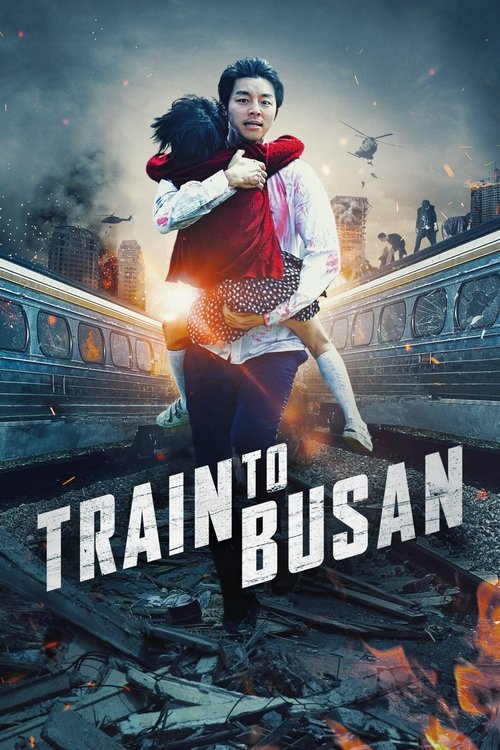
Train to Busan
Binge Brief
- Released in South Korea on 20 July 2016, with a Midnight Screenings premiere at the Cannes Film Festival on 13 May 2016.
- Runtime: 118 minutes. Stars Gong Yoo as Seok-woo and Kim Su-an as his daughter Su-an, with Ma Dong-seok and Jung Yu-mi as fellow passengers Sang-hwa and Seong-kyung.
- Passed 10 million theater admissions in South Korea within about three weeks of release and went on to surpass 11 million, one of the fastest films in Korean box office history to reach that mark.
- Directed and co-written by Yeon Sang-ho, who released the animated prequel "Seoul Station" the same year, showing how the outbreak began.
- Won the Audience Award for Best Asian Feature at the 2016 Fantasia International Film Festival and Best Horror Film at the 2017 Saturn Awards.
- Followed by a standalone sequel, "Peninsula" (2020), set four years after the outbreak depicted in this film.
Synopsis
Seok-woo, a divorced Seoul fund manager who barely has time for his young daughter Su-an, agrees to take her to Busan for her birthday so she can see her mother. Minutes before their KTX train pulls out of Seoul Station, a badly injured woman slips aboard unnoticed. She is already infected with a virus that turns people into fast, violent attackers, and by the first stop the outbreak has reached several train cars.
As the infected spread from car to car, Seok-woo and Su-an end up relying on a small group of fellow passengers: Sang-hwa, a blunt, physically tough man traveling with his pregnant wife Seong-kyung; two high school baseball teammates; and an elderly woman traveling with her sister. Every stop the train makes forces a decision about who gets let back on board, and those decisions start to expose which passengers will help each other and which will only protect themselves, especially a senior operations executive who pushes the group toward the latter.
Word from the outside is unreliable. Radio and phone reports describe the outbreak as contained even as stations along the line are quarantined or overrun, and a stop that looks like a safe zone turns into one of the film's most dangerous set pieces. The group has to fight through infected passengers, soldiers who no longer trust anyone getting off the train, and disagreements within their own ranks about how far they should go to protect people who are not their own family.
Yeon Sang-ho, who also directed the same year's animated prequel "Seoul Station" about how the outbreak began in the capital, keeps the horror grounded in the train's tight corridors and the passengers' shifting alliances rather than in the wider chaos outside. The film's box office success in South Korea, where it passed 10 million admissions within weeks of its July 2016 release, led to a 2020 standalone sequel, "Peninsula," set four years after the events on the train.
Train to Busan cast







Best scenes
- Initial Zombie Breakout: The intense moment when passengers first encounter the zombies on the train, setting the tone for the relentless action to follow.
- Tunnel Escape: A suspense-filled escape through a dark tunnel, highlighting teamwork and individual bravery.
- Sang-hwa's Sacrifice: An emotional and heroic scene where Sang-hwa fights off zombies to save his wife and others, showcasing deep themes of sacrifice.
- Train Station Ambush: The group’s arrival at an ostensibly safe station that turns into a deadly trap, ramping up the tension.
- Final Standoff: The climactic fight for survival in the conductor’s cabin, filled with both desperation and determination.
Filming locations
- Seoul Station: Starting point of the perilous journey, shot with a bustling urban backdrop.
- Daejeon Metro: Major sequences were shot in Daejeon, providing a realistic and gritty setting.
- Moving KTX Train: Authentic scenes inside Korea’s KTX trains enhance the claustrophobic feel.
- Busan Station: The hopeful yet haunting destination, featuring prominently towards the film’s climax.
- Rural Outskirts: Shots capturing the train speeding through Korea’s countryside, contrasting safety inside against the chaos outside.
Visual design and costumes
- Realistic Zombie Makeup: Exceptionally detailed to appear frighteningly real and horrifying.
- Practical Effects for Action Sequences: Minimal reliance on CGI, favoring real stunts and practical effects.
- Everyday Clothing: Starts normal but gradually becomes disheveled and bloodied, symbolizing the descent into survival mode.
- Dim Lighting and Confined Spaces: Enhances the horror and claustrophobia aboard the train.
- Color Palette: Utilizes a grim and muted color scheme to amplify the apocalyptic atmosphere.
Themes and messages
- Social Commentary on Class Division: Highlights disparities and how crises can exacerbate or blur social lines.
- Humanity vs. Survival: Examines the moral dilemmas faced when survival is at stake.
- Sacrifice and Heroism: Showcases various forms of bravery and selflessness among the characters.
- Parental Love and Responsibility: Explored through the relationship between Seok-woo and his daughter.
- Fear and Paranoia: Reflects on how fear can drive irrational behaviors and societal breakdown.
Interesting facts
Casting Choices: Originally, the roles of Seok-woo and Sang-hwa were offered to top Korean actors like Song Kang-ho and Kim Yoon-seok, who turned them down. Gong Yoo and Ma Dong-seok, who eventually took these roles, brought significant depth to the characters, greatly contributing to the film’s success.
Inspired by a Webcomic: Director Yeon Sang-ho based "Train to Busan" on his own webcomic titled “Seoul Station,” which is an animated prequel exploring the origins of the film's zombie outbreak.
Record-Breaking Performance: Upon its release, "Train to Busan" set a record for the highest single-day opening in South Korea by achieving over 872,000 viewers. It quickly surpassed 10 million viewers, making it one of the fastest films to reach this milestone in South Korean cinema history.
Global Appeal: The film was extremely well-received internationally, being shown in the Midnight Screenings section at the 2016 Cannes Film Festival, where it received a standing ovation. It went on to become a massive hit in countries like Singapore, Hong Kong, and Malaysia.
Potential Hollywood Remake: Due to its international success, "Train to Busan" attracted interest from Hollywood for a potential remake. Gaumont, a French film studio, acquired the rights to produce an English version, reflecting the global impact and appeal of the original film.
Real-life loves on set
There are no publicly reported instances of real-life romances or relationships developing among the main cast members on the set of "Train to Busan." The film was primarily focused on intense action and dramatic sequences, and it seems that the cast maintained professional relationships throughout the production. The interactions and dynamics portrayed in the film were strictly professional and part of the actors' performances.
If you liked this film
Matched on genre, country and era. Closest first.