
Korean food
Yukgaejang: Korea’s Spicy Shredded Beef Soup, Named After Dog Meat Stew
육개장 · yukgaejang
A beef soup whose name literally means "the beef version of dog meat stew" — Korea's spicy, shredded-brisket yukgaejang has royal-kitchen roots, a famous Daegu variant, and a history of being eaten in both the hottest and coldest months of the year.
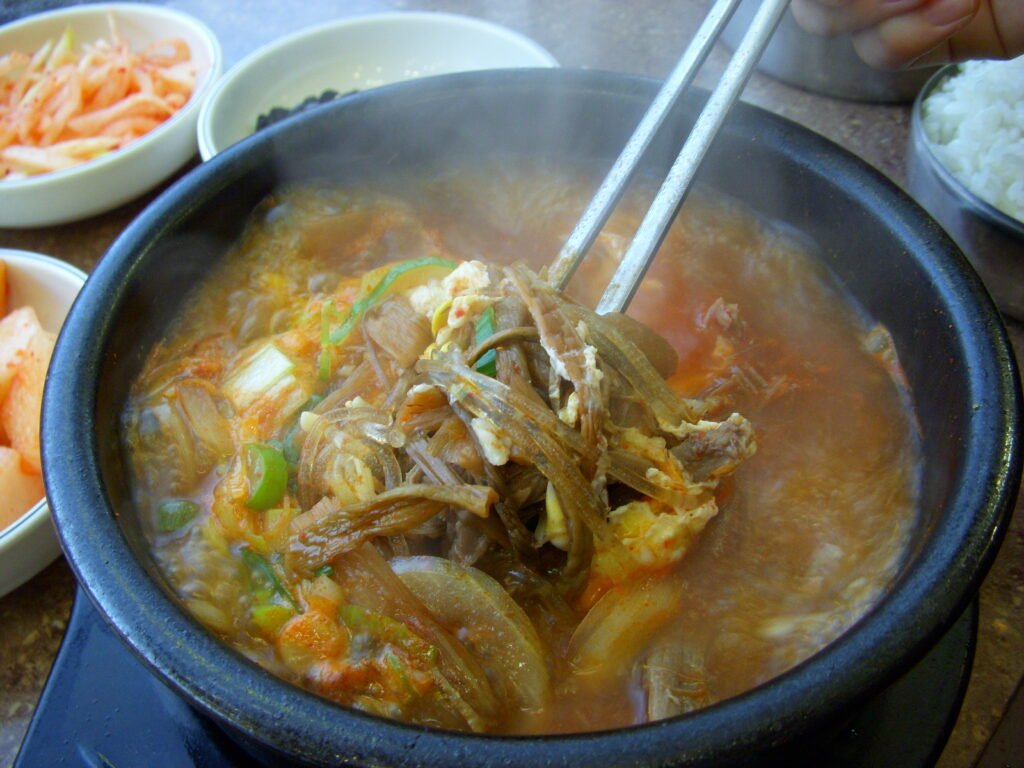
Yukgaejang is a spicy Korean soup built from shredded beef brisket simmered for hours in a red, gochugaru-based broth, then loaded with fibrous vegetables like bracken fern and mung bean sprouts. It is thick, hearty, and meant to be eaten with rice, somewhere between a soup and a stew.
The name: from dog meat stew to beef soup
The name splits into two parts: “yuk” (육, meat or beef) and “gaejang” (개장). According to Wikipedia’s entry on the dish, gaejang originally referred to a spicy dog meat stew, boiled with strong seasonings and herbs specifically to mask the meat’s odor. Yukgaejang was created as a beef-based substitute for people who did not want to eat dog meat, keeping the same style of preparation but swapping the protein. The connection explains why the dish reads, linguistically, as “beef version of gaejang” rather than as its own standalone name. It is a detail some diners find surprising, since nothing about the finished bowl of beef and vegetables hints at that origin.
- Korean name
- 육개장 (yukgaejang)
- Literal meaning
- "Yuk" (beef) + "gaejang" (originally a spicy dog meat stew)
- Main ingredients
- Shredded beef brisket, gosari (bracken fern), mung bean sprouts, scallions, torandae (taro stem)
- Spice base
- Gochugaru (Korean red chili flakes) stir-fried in oil before broth is added
- Regional variant
- Daegu's daegutang / ttaro-gukbap (rice served separately from the soup)
- Related dish
- Dak-gaejang / dak-yukgaejang (chicken version of the same soup)
From royal kitchens to everyday tables
Yukgaejang is classified as a type of gomguk, a category of bone-and-meat soups that includes dishes once served in Korean royal court cuisine. The earliest known written recipe appears in the Kyugonyoram, a Hangul cookbook from the early 1800s, which places the dish’s documented history at roughly two centuries, even though the style of long-simmered, shredded-meat soup it belongs to is likely older. For readers curious about how dishes like this one fit into the broader structure of Korean cooking, our guide to Korean food culture covers how soups, rice, and banchan work together at the table.
Beef itself was historically expensive in Korea, which is part of why a dish built around a generous amount of shredded beef carried some status. As cattle and beef became more widely available, yukgaejang moved beyond special occasions and palace kitchens into everyday restaurants and homes.
Daegu’s own version
The city of Daegu has a documented association with yukgaejang. A Daegu variant of the dish, known as daegutang, gained popularity during the Japanese colonial period, and the dish’s spread toward Seoul is tied to the construction of the Gyeongbu railway line connecting the two cities. Daegu also has its own local spin called ttaro-gukbap, literally “separate soup-and-rice,” a style of yukgaejang served with the rice kept in its own bowl rather than submerged in the broth, so diners can control how wet or dry each spoonful is. Whether Daegu’s version should be called the definitive regional style of yukgaejang, or simply one well-known regional variant among several, is not something sources agree on in detail, so it is worth treating it as a notable local specialty rather than a single authoritative “original.”
How it’s made
The technique behind yukgaejang is less about a fixed ingredient list and more about a method. Beef, usually brisket, is simmered for an hour or more until it becomes tender enough to pull apart by hand into long strands rather than cut with a knife; shredding, not slicing, is treated as a defining trait of the dish. The cooking liquid from that beef becomes the base of the broth.
Separately, a seasoning element is built from Korean red chili flakes, or gochugaru, combined with ingredients like soy sauce, garlic, sesame oil, and black pepper. In many home versions this chili mixture is heated briefly in oil until the oil turns a visible red, a quick step that infuses the fat with color and flavor before the vegetables and shredded beef are tossed through it by hand. Only after that coating step does everything go into the simmering broth to finish cooking together.
The vegetables are where yukgaejang gets its particular, slightly chewy texture. Gosari, dried and reconstituted bracken fern, is often singled out as the ingredient that gives the soup its earthy, almost mountain-vegetable character. Mung bean sprouts and scallions are blanched or wilted into the broth, and taro stem, known as torandae, appears in many traditional versions as another fibrous, textured vegetable, alongside sliced onion. Some home cooks finish the bowl with a thin stream of beaten egg drizzled into the hot broth just before serving, similar to an egg-drop technique, though this is a variation rather than a universal rule.
A soup for every season
Sources describe yukgaejang’s seasonal role in two different ways, and both appear to be true depending on the era and the household. Wikipedia notes that the dish was historically eaten mainly by people worn out by midsummer heat, looking for something restorative, a role that places it alongside better-known hot-weather dishes like the ginseng chicken soup samgyetang, which is strongly tied to Korea’s hottest days of summer. At the same time, contemporary food writing, including coverage from the Korea Herald, frames yukgaejang primarily as cold-weather comfort food, “a completely satisfying meal on a cold winter day.” In practice, a soup this heavy, spicy, and warming works for both ends of the calendar, which may be exactly why it has stayed popular across generations rather than being tied to one single season.
However it’s eaten, rice is central to the experience. Some restaurants mix rice directly into the soup bowl, while others, following the Daegu ttaro-gukbap style, serve it separately so each diner decides how to combine the two.
Dak-gaejang: the chicken variation
A chicken-based version of the dish exists under the names dak-yukgaejang or dakgaejang, built using the same gochugaru-based method and similar vegetables but substituting chicken for beef. It is a less common order than the beef original, but it follows logically from the dish’s history: yukgaejang itself was already a substitution dish, created to replace dog meat with beef, so a further substitution to chicken sits comfortably within that same tradition rather than breaking from it.
Yukgaejang sits at an interesting point in Korean food history: a dish named after the thing it replaced, elevated enough to have served in royal kitchens, yet common enough today to show up on lunch menus across the country. Compared to a tabletop dish like samgyeopsal, built around grilling and sharing meat directly at the table, yukgaejang is a solitary, spoon-and-rice meal, simmered for hours before anyone sits down to eat it.