Korean food
Korean food culture: how a Korean table actually works
한식 문화
Rice, soup and shared banchan, all on the table at once. The etiquette that goes with it, the cheop count, fermentation and kimjang, the regional kitchens, temple food and mukbang.
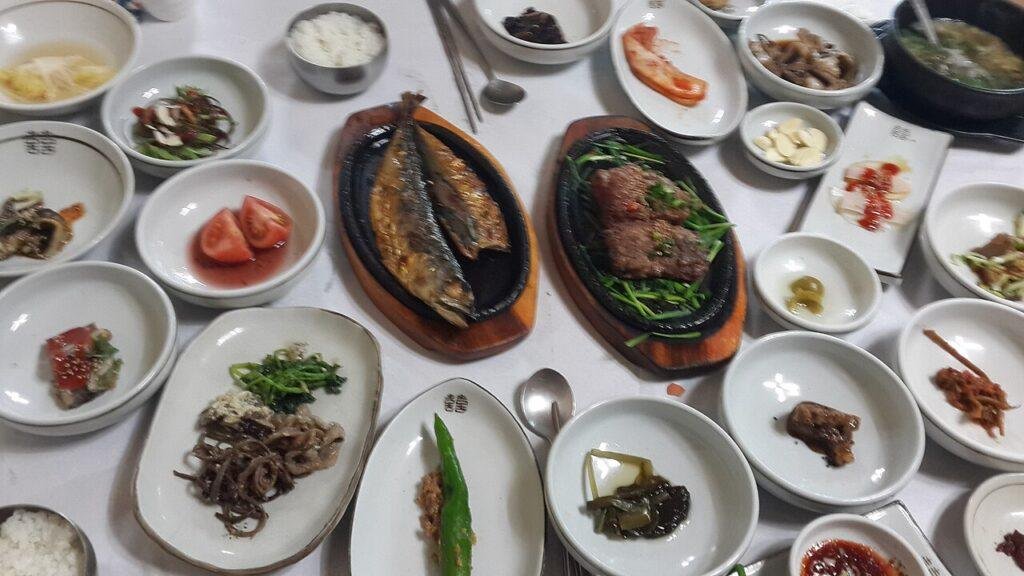
Korean food culture is built around one arrangement: rice, soup and a spread of shared side dishes called banchan, all on the table at the same time. Soup belongs to the main course rather than coming first, the rice bowl stays on the table, and nobody starts eating before the eldest person does.
Rice, soup and banchan
Rice is the centre of the meal, and everything else is arranged to go with it. Soup is served as part of the main course, as an accompaniment to the rice alongside the other dishes, and not at the beginning or the end of the meal as in many other cuisines.
Banchan are the small side dishes served with the rice. They are usually set in the middle of the table to be shared, they are meant to be finished at each meal, and they are topped up during the meal if they run out. Kimchi is the one that is always there; some Koreans do not consider a meal complete without it.
A formal table is counted by its side dishes, in cheop: 3, 5, 7, 9 or 12 cheop bansang. Twelve was the royal count. Those who were not royal ate from smaller tables, so the number of dishes also marked a household’s standing.
- The table
- Rice, soup and shared side dishes, served together
- Soup
- Part of the main course, not a starter
- Banchan
- Shared, and replenished during the meal
- Formal settings
- 3, 5, 7, 9 or 12 cheop; 12 was the royal table
- Cutlery
- Sujeo, a metal spoon with chopsticks, usually metal and flat
- Rice bowl
- Stays on the table
- Who starts
- The eldest; younger diners also try not to finish first
- Drinks
- Nobody pours their own; the youngest pours for elders
- Kimjang
- Communal kimchi making, on UNESCO's list since 2013
Korean dining etiquette
| Rule | What it means in practice |
|---|---|
| The eldest starts | Younger diners do not pick up their chopsticks before the elders or guests, and try not to finish before them |
| The bowl stays down | Rice and soup bowls are not lifted from the table; picking one up to bring it to the mouth is considered rude, unlike in China and Japan |
| Spoon and chopsticks | Each diner gets sujeo, a metal spoon with a pair of chopsticks, usually metal as well |
| Nobody pours their own drink | The youngest pours for the elders, using both hands, and the one receiving holds the glass with both hands |
| Turn away to drink | When drinking alcohol, diners turn their face away from the eldest and cover their mouth |
The spoon is the distinctive part. Pairing a spoon with chopsticks as a matched set is a feature unique to Korea; most chopstick-using countries have either given up the spoon or limited its use as an eating utensil. The drinking rules are laid out in more detail on the soju page.
Fermentation and kimjang
A large part of Korean cooking rests on things made to keep: soy sauce, soybean paste, chilli paste, vinegar and kimchi. They were traditionally stored in earthenware jars at home, a practice that refrigerators, kimchi fridges and factory kimchi have made less common.
Kimjang, the making and sharing of kimchi in late autumn so that households have enough for the winter, was added to UNESCO’s Representative List of the Intangible Cultural Heritage of Humanity in 2013.
Traditional regional Korean cooking
Korean cooking is traditionally divided into eight provinces, following the administrative districts of the Joseon dynasty. Until the late nineteenth century transport was poor and each region kept its own tastes; modern transport and foreign food have since made the regional styles overlap.
- Jeolla, in the southwest, is known for a rich and sumptuous style, with plenty of seafood and rice. Samhap, with fermented skate, comes from here.
- Gyeongsang, in the southeast, cooks simply and seasons heavily, so its food is saltier and hotter than Jeolla’s.
- Gangwon, in the mountainous east, is plain cooking built on potato, corn, buckwheat and seafood.
- Jeju uses simple ingredients, tastes generally salty, and serves raw seafood, hoe, as part of the meal. More on the island is in the Jeju travel guide.
Temple food
Korean Buddhist temple cooking avoids garlic, spring onion and the rest of the onion family, as well as jeotgal, the salted fermented seafood used in much ordinary Korean cooking. What it keeps is seasonal: young shoots and greens that change with the region and the time of year. Tongdosa and Haeinsa, both in South Gyeongsang, are among the temples known for their food, and the Buddhist nun Jeong Kwan is a well-known temple cook.
Mukbang and eating alone in South Korea
Mukbang, online broadcasts of a host eating and talking to viewers, first appeared on the streaming service AfreecaTV in 2009 and spread to cable and terrestrial television. Researchers have linked its rise to widespread loneliness in South Korea, and describe it as a virtual shared meal for people who eat by themselves.
Questions people ask
Is all Korean food spicy? No. Jajangmyeon contains no chilli in standard recipes, temple cooking leaves out even garlic, and Gangwon’s regional cooking is described as simple and plain.
Why are Korean chopsticks flat? Because they are usually metal, and metal is slippery. Stamping them flat makes them easier to grip.
What are jang? The fermented seasonings behind much of Korean cooking: ganjang, soy sauce; doenjang, soybean paste; and gochujang, chilli paste. A royal twelve-cheop table carried three kinds of jang alongside its side dishes.
Dishes to start with: bibimbap, bulgogi, kimchi jjigae, tteokbokki, kimbap, oi muchim, Korean hot pot and palsaik pork belly. For the holiday table, see Chuseok.